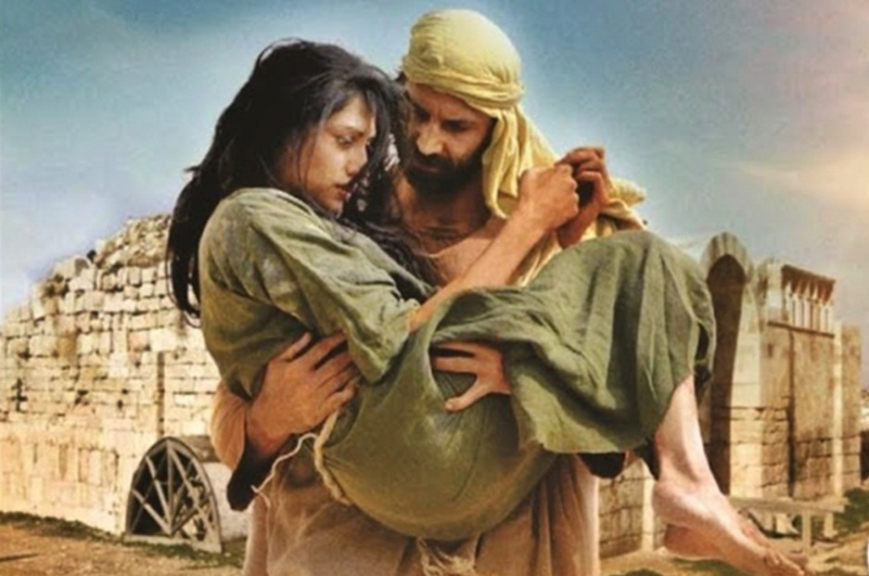
The passion that God intends to fuel our mission as Christ-followers is our awareness of Christ’s redemptive love for us. The Christian life is about offering ourselves to God in response to his redeeming love for us. Paul makes that clear in his letter to the church at Rome. He devotes the first eleven chapters of Romans to explaining God’s gracious plan to redeem his people from sin, and then introduces the last five chapters, which explain our mission, in Chapter 12:1 with the words, Therefore, I urge you, brothers, in view of God’s mercy, to offer your bodies as a living sacrifice, holy and pleasing to God—this is your true and proper worship.
The problem with the awareness of Christ’s redeeming love for me being the fuel for my mission is that most of the time I don’t particularly FEEL very loved. What I feel is frustration with all the obstacles that get in the way of reaching my good goals. (God could make things a little easier). What I feel is despair, when God doesn’t seem to be answering my prayers. What I feel is ashamed, because I still struggle with the same sins that usually ensnare me. What I feel is bored and empty, because life drains my emotional tank. And sometimes, God allows me to hurt so much that it doesn’t feel like he loves me at all.
In a world where Jesus, our High Priest, understands our feelings, he knows how hard it is for us to push through those feelings and root our lives in truth. He doesn't want us to suppress or deny those feelings, but to push through them to the reality that God's love for us is unquenchable. To help us in this struggle with our feelings, God gives us pictures in Scripture of that relentless, redemptive love. One of these portraits comes from the book of Hosea.
The book opens with God saying to Hosea, “I want you to marry a whore and to have children with her, to truly be a husband to her in every way, even though you know from the start that she will be unfaithful. Hosea, you and I are going to completely give ourselves to people who will completely reject us. You see, Hosea, I am a husband whose wife, Israel, is unfaithful to me. Unless you experience the same thing, you will never know how my love works. Once you have experienced this, you will proclaim my love to the world.”
Hosea marries Gomer, daughter of Diblaim, a woman whose heart is like a city without walls. With virtually no boundaries in place, she is defenseless against her insecurities and the pull of her whims. Gomer bears Hosea two children, but Hosea names the third child, “Not Mine.” She was pregnant by another man.
Our security in God’s redeeming love for us is rooted in the truth that just as Hosea knew Gomer would be unfaithful to him before marrying her, God knew that we would be unfaithful to him in countless, sinful ways, before drawing us into a love relationship with himself. You and I cannot surprise God with any expression of our evil rebellion. His love for us never has and never will depend upon our attractiveness or performance. Were that the case, we could lose his love. Rather, we are secure in his love because it is rooted in his unchangeable decision to love us. This truth is set forth in the Deuteronomy 7 description of God’s covenantal love: The LORD did not set his affection on you and choose you because you were more numerous than other peoples, for you were the fewest of all peoples. But it was because the LORD loved you…(vs 7-8). So he loves us…..because he loves us.
But this portrait of relentless love gets better. Later in the story, after Gomer has left her husband for a profligate life, Hosea writes:
The LORD said to me, "Go, show your love to your wife again, though she is loved by another and is an adulteress. Love her as the LORD loves the Israelites, though they turn to other gods and love the sacred raisin cakes." So I bought her for fifteen shekels of silver and about a homer and a lethek of barley. Then I told her, "You are to live with me many days; you must not be a prostitute or be intimate with any man, and I will live with you" (Hosea 3:1-3).
Hosea is to buy Gomer out of slavery, the technical term for which is “redemption.” After years of looking for love in the wrong place, allowing herself to be used by men and then thrown out like a piece of garbage, she had sunk so low, economically, that she had become a slave. She has literally become a piece of property. She is up for sale in the marketplace, and we know what a terrible thing that was. Gomer is made to stand naked on the public auction block in her degradation and shame, while men, women, and children gawk at her. This woman made in God’s priceless image is reduced to being purchased for fifteen shekels and some bushels of barley.
Imagine what must have been going through her mind, when Gomer recognized the voice of the man bidding for her—her husband! Was he buying her to get revenge for her unfaithfulness to him, to treat her harshly as his slave? He could do that because slaves were considered mere property. Why wouldn’t he do that considering the deep, humiliating wounds to Hosea’s heart that she had inflicted by her unfaithfulness to him?
But instead, Hosea covers her nakedness, takes her hand in his, and leads her home—not to be the slave she deserved to be but to be the object of his love, adoration, and devotion as his beloved wife. This is grace. This is Christ’s redeeming love for you and me!
We have gone whoring after gods who promised to give us happiness and pleasure, especially the god of self. But instead, those gods have enslaved us in shameful secret sins that degrade us and convince us that no one, least of all a holy god, could love us. Our false gods ravage us and throw us away like garbage.
But God’s unconditional love for you and me is relentless. It refuses to be turned away, for example, by justice. God should cast us out of his presence forever; that is how evil we really are. But that just wrath fell on Jesus. God’s relentless love refuses to be stopped by our repulsiveness; our sin is more revolting and abhorrent to him than we can imagine. But he sees us as a spectacularly gorgeous bride he desires because he clothed us in the righteousness of Christ. God’s relentless love refused to let the personal wrong he has suffered as our rejected lover make him turn his back on us. Instead, he pursued us, gave us a new heart, and drew us to himself. And the price He paid to redeem us was not a few shekels and bushels of wheat. Peter writes, For you know that it was not with perishable things such as silver or gold that you were redeemed from the empty way of life handed down to you from your forefathers, but with the precious blood of Christ, a lamb without blemish or defect (1 Pet 1:18-19).
God does not offer us a love that cost him nothing. No matter what our emotions tell us at any given moment, the unalterable reality is that Christ loves his bride, the church, with a love so great that we don’t have the mental horsepower to even understand it.
Thinking Further
1. In what ways do you identify with Gomer?
2. Why should God have let you go—to be ravaged by the merciless tyrant, Sin, to whom you offered your allegiance instead of God? Why didn’t he?


